Content Repository API for Java (JCR) is a specification for a Java platform application programming interface (API) to access content repositories in a uniform manner. The content repositories are used in content management systems to keep the content data and also the metadata used in content management systems (CMS) such as versioning metadata. The specification was developed under the Java Community Process as JSR-170 (Version 1). and as JSR-283 (version 2).
Category: Content management & strategy (Page 105 of 484)
This category includes editorial and news blog posts related to content management and content strategy. For older, long form reports, papers, and research on these topics see our Resources page.
Content management is a broad topic that refers to the management of unstructured or semi-structured content as a standalone system or a component of another system. Varieties of content management systems (CMS) include: web content management (WCM), enterprise content management (ECM), component content management (CCM), and digital asset management (DAM) systems. Content management systems are also now widely marketed as Digital Experience Management (DEM or DXM, DXP), and Customer Experience Management (CEM or CXM) systems or platforms, and may include additional marketing technology functions.
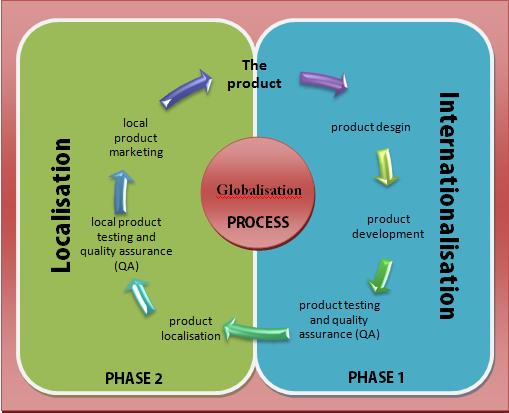
Content strategy topics include information architecture, content and information models, content globalization, and localization.
For some historical perspective see:
https://gilbane.com/gilbane-report-vol-8-num-8-what-is-content-management/
Customer experience (CX) emerged from work in the 1990s on “experience management” which was not limited to “customers” but included employees, suppliers, and other stakeholders. Customers became the primary focus in the 2000s and was fueled by the growth of digital marketing channels. Technology suppliers and analysts serving marketing organizations began targeting CX in their products and services with features and their own marketing and branding efforts. In particular many “web content management (WCM) systems” became “customer experience management” (CXM), web experience management” or “web engagement management” systems (both using the WEM acronym). Most of these same products and services were also applicable and in use for managing other stakeholder experiences, and became “digital experience” (DX) systems or platforms (DXPs), with CX being one component.

The 2016 edition Gilbane Conference on Content Management, Marketing, and Digital Experience in Boston helps marketers, IT, and business managers integrate content strategies and computing technologies to produce superior digital experiences for all stakeholders.
Chaired by: Frank Gilbane ∙ Organized by: Information Today Inc
Conference website: http://gilbaneconference.com/2016/default.aspx
Program: http://gilbaneconference.com/2016/Program.aspx
Speakers: http://gilbaneconference.com/2016/SpeakerList.aspx
Presentations: http://gilbaneconference.com/2016/Presentations.aspx
For posts about this conference see: https://gilbane.com/category/gilbane-conference/gilbane-conference-2016/
For additional information on our eventssee Gilbane Conferences.
“Digital Experience” (DX) covers a lot of territory – so much so that discussions about DX technology often result in a consensus that collapses as projects surface incompatible expectations. “Customer Experience” (CX) had a similar problem, getting way out of hand with expectations of “omnichannel”, including brick and mortar. If you’ve been around enterprise software for a while you’ll be familiar with software category labels outgrowing their britches and acting like they can do anything, if you’ll forgive the anthropomorphizing.
Digital experience is not a single thing that you buy. It is a solution you build with unique collections of products for a specific audience. This is not a walk in the park given the vast number of potentially-relevant components. It can help to keep in mind a few universal laws of enterprise software, and one very relevant piece of history.
Universal laws of enterprise software
- Software products never stop growing. Even if there were a cure for feature bloat, ongoing maintenance will add code.
- Software categories, which are created by a combination software marketers and industry analysts, grow, shrink, and get re-purposed to meet the business needs of their creators, and to accommodate new technologies and industry applications.
- Software companies, like all businesses, need continuous growth. That means new products, expanded product capabilities, perhaps a suite, and if possible, a platform play for a bigger piece of the pie.
- Software needs to be integratable because enterprises have complex data and workflows that all involve software.
- Software needs to be agile because even the best software engineers and product managers can’t anticipate all the ways customers will use the software, and neither can their customers.
A lesson from the past
Before the Web juggernaut progress had been made in building graphical user interfaces for business applications and managing and presenting digital content in increasingly friendly ways. But the solutions were mainly proprietary, which meant multiple user interface learning curves, and complex and costly integrations. The Web, with a much simplified and standardized markup language for content and a way to present it in a browser, soon became the dominant digital experience for both business and personal computing. The Web experience was so simple that the audience for digital content increased dramatically. Brochure-ware and simple intranets blossomed. Then things got complicated.
The promise of e-commerce and new business models fueled investment fever. But the integrations required between the web publishing and the backend systems necessary to support web commerce (pricing databases, supply chain, logistics, etc.), didn’t exist. Early attempts to build them were custom, complex, and costly, and the results were fragile. The technical challenges were compounded by a lack of domain and integration expertise in dot-com startups, and a lack of agility and organizational resistance in larger organizations. “Frictionless commerce” failed on the front and back-ends, and the dot-com bubble burst.
DX today
We have come a long way, but the pace of new technologies ensures integration and agility will remain core challenges. DX is riding high today and that is a good thing. DX is not a bubble. But that doesn’t mean there won’t be overly ambitious strategies, unsuccessful implementations, and weak products.
- Don’t forget the laws of enterprise software, or the lessons from the dot-com crash.
- Note that integratablility and agility are as critical for operational efficiency as they are for a smooth digital experience.
- DX is about audiences, not just about customers, employees, or partners – each of these can be made up of many audiences.
- Scope for success. Ensure your strategy includes achievable projects for well-defined audiences. You will be more successful and able to implement in less time by picking specific integrations that have high value, for example, content management ( CMS) with CRM, or e-commerce.
- Don’t limit DX technology research to a single analyst firm. They mostly cover the same vendors, but their analysis often differs significantly.
- Be sure to develop enough in-house expertise to make well-informed decisions about the applicability and readiness of new technologies such as deep learning, AR, blockchain.
And of course, join us at Gilbane’s Digital Experience Conference in Washington DC, April 29 – May 1, 2019, where we’ll be looking at the latest DX technologies, integration strategies, and practices.
NOTE: This article was first published by eContent Magazine on November 26, 2018
“Enterprise content management” or “ECM” refers to a type of content management that is suitable for large complex organization or “enterprise” application, typically including many types of content (e.g., documents, web content, digital assets), workflows, and integrations with other enterprise software applications.
The term “enterprise content management” came into common use by 2000, and evolved from “enterprise document management” which was created as part of a successful marketing campaign by document management vendor Documentum. When Documentum added support for web content management they were able to successfully re-brand themselves an enterprise content management vendor to compete with the growing number web content management vendors.
“Enterprise content management” has always been a problematic term:
- There is no agreement on when a content management system becomes an enterprise content management system.
- The term can and often is meant to imply that:
- a single content management system and repository can manage all of an enterprise’s content,
- or a single content management product can support the needs of every department or functional area in an enterprise.
Neither of these situations are easily, if ever, found in the real world. The only reasonable use of the term is to suggest a content management application or system, is at the complex end of the spectrum.
Content management, or CM, is the set of processes and technologies that support the collection, managing, and publishing of information in any form or medium. There are many types of content management systems (CMS) that include a wide variety of functions in addition to content management. Categories of content management systems include Enterprise Content Management (ECM), Web Content Management (WCM), and Digital Asset Management (DAM).
Most CMSs are currently marketed as “Digital Experience Management” (DEM or DXM), and “Customer Experience Management” (CEM or CXM or DXP) systems or platforms, and may include additional marketing technology functions.
For an extensive collection of content management news and blog posts see:
https://gilbane.com/category/content-management-strategy/
Also see…
A web content management system (WCMS) is a software system that provides website authoring, collaboration, and administration tools designed to allow users with little knowledge of web programming languages or markup languages to create and manage website content. A robust WCMS provides the foundation for collaboration, offering users the ability to manage documents and output for multiple author editing and participation.
For an extensive collection of content management news and blog posts see:
https://gilbane.com/category/content-management-strategy/
Also see…
Content management, or CM, is the set of processes and technologies that support the collection, managing, and publishing of information in any form or medium. When stored and accessed via computers, this information has come to be referred to as content or digital content. Digital content may take the form of text, multimedia files (such as audio or video files), or any other file type that follows a content lifecycle requiring management. Content management can be found in both dedicated systems and as a component of information technology systems.
The term ‘content management’ became popular when ‘web content management’ systems emerged to differentiate them from ‘document management’ systems which were associated with paper documents. ‘Content management’ then quickly evolved to cover all kinds of unstructured or semi-structured content. Common types of content management systems (CMS) include Enterprise Content Management (ECM), Digital Asset Management (DAM), Multichannel Content Management (MCM), Component Content Management (CCM), and web content management (WCM). The latter are now widely marketed as Digital Experience Management’ (DEM or DXM, DXP), and ‘Customer Experience Management’ (CEM or CXM) systems or platforms, and may include additional marketing technology functions.
For an extensive collection of content management news and blog posts see https://gilbane.com/category/content-management-strategy/
For more historical background see What is Content Management?