We’re building the program for our annual Boston conference in the next few weeks and want to make sure you have the opportunity to apply to be a speaker.
As a speaker you’ll be addressing our influential community of content management, digital marketing, and technology experts and practitioners. Join us to educate, learn, and network. We are proud of our speakers and promote them as a key benefit of the conference.
The Gilbane Digital Content Conference is focused on content and digital experience technologies and strategies for marketing, publishing, and the workplace.
The deadline for proposals is Friday June 2, 2017!
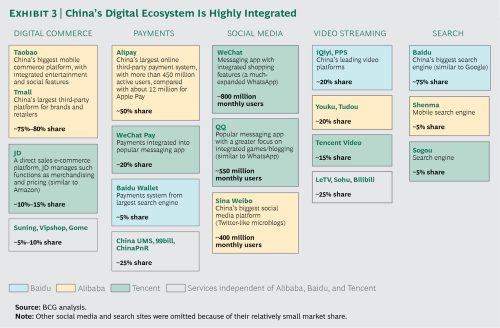
E-commerce: What China reveals about the future of shopping
China’s e-commerce market is the world’s largest and fastest growing. It is also more mobile and more integrated with relevant platforms than those in the West, allowing for smoother customer experiences. This goes beyond WeChat e-commerce capability, the envy of western messaging platforms.
There are reasons eastern and western e-commerce may continue to evolve differently. But there is a lot to learn from China’s experience. BCG and Alibaba dig in. Read More
Digital assistants drive new meta-platform battle
Bob O’Donnell riffs on the intersection of digital assistants, the voice interface, and platform value. This weeks’ keynotes at Google I/O, and last week’s at Microsoft Build both provide useful context to several of O’Donnell’s points.
… digital assistants … have the potential to completely devalue the underlying platforms on which they run. To put it succinctly, if I can use, say, Alexa across an iPhone, a Windows PC, my smart home components and a future connected car, where does the unique value of iOS or Windows 10 go? Out the door… Read More
Improving summarization with machine learning
That this would happen should be expected, especially after the dramatic improvement to machine translation due to ML. MIT Technology Review’s Will Knight reports on developments at Salesforce following their acquisition of MetaMind, which is what we point you to below. But you might also be interested in the more technical description of how the algorithm works — at least scroll down past the technical paragraphs to see useful sample results. Read More
Mobile First, Desktop Worst
Designing for an optimal user experience is extremely difficult even with a single screen because of the variety of media, layout, and use cases. Multiply the number of screens by n, and it seems like an impossible task. On top of this fiendish complexity, there are compromises to be made between developer objectives and brand directives. No wonder design is often dumbed down to be simply useable across devices rather than optimal. This may not be a solvable problem, though better tools, perhaps informed by machine learning, will certainly help. In the meantime, it pays not to expect too much from simple approaches. Read More
Gilbane Digital Content Conference
Call for Speakers Open
Content and digital experience technologies and strategies for marketing, publishing, and the workplace.
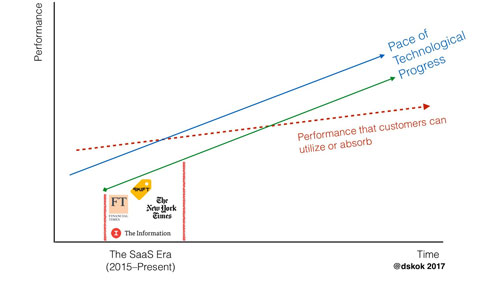
Why the SaaS era of journalism will be our most exciting yet
During the first quarter century of the commercial internet, digital journalism has already gone through three eras: the portal years, the search years, and the social years. Each era advanced storytelling and presented new revenue streams, but I would argue that digital journalism is now entering its most exciting period yet. Think of this as the stories as a service era, where journalism will be paid for by readers, for readers… Digital journalism has been commoditized, creating new market opportunities at the bottom of a new disruption curve that is not yet “good enough”. (italics added). Read More
Parsing the IBM Watson and Salesforce Einstein deal
But aren’t Watson and Einstein competing? In short, the deal is about more data; it’s a complementary marriage of Watson’s broad unstructured data capability and Salesforce’s structured data focus on their application and customer experience. Well, that’s what caught my interest anyway. But there is more to it and James Governor sorts it out… Read More
How Germany’s Otto uses artificial intelligence
Otto is the largest e-commerce merchant in Germany after Amazon. Their use of AI goes beyond pure marketing to reduce shipping, returns, and inventory costs, and improves customer experience. An instructive example of what is already being done with machine learning, and without human hands on, their system…
analyses around 3bn past transactions and 200 variables (such as past sales, searches on Otto’s site and weather information) to predict what customers will buy a week before they order… has proved so reliable—it predicts with 90% accuracy what will be sold within 30 days—that Otto allows it automatically to purchase around 200,000 items a month from third-party brands with no human intervention.Read More
How our publisher tracked down his online troll and changed our comments for the better
MIT Technology Review is determined to keep the value of comments alive. Jason Pontin reports on his efforts and current strategy in this thoughtful and thorough piece. Read More
Facebook and the cost of monopoly
Facebook may have a monopoly in social networking, and while that may be a problem for Snap or any other would be networks, Facebook would surely argue that … society as a whole shouldn’t be too bothered… The problem is that Facebook isn’t simply a social network: the service is a three-sided market — users, content providers, and advertisers — and while the basis of Facebook’s dominance is in the network effects that come from connecting all of those users, said dominance has seeped to those other sides… Facebook passed Google as the top traffic driver back in 2015, and as of last fall drove over 40% of traffic for the average site, even after an algorithm change that reduced publisher reach… So is that a monopoly when it comes to the content provider market? I would argue yes, thanks to the monopoly framework above. Read More
Also…
The history of Instant Articles’ path to Instant Recall, via The Verge